
Quick answer
The most reliable sign of a slab leak is a water meter that keeps moving when nothing in the house is using water. Other signs include warm spots on the floor, an unexplained jump in the water bill, damp or cracked flooring, and the sound of running water. Florida homes built on concrete slabs are especially prone.
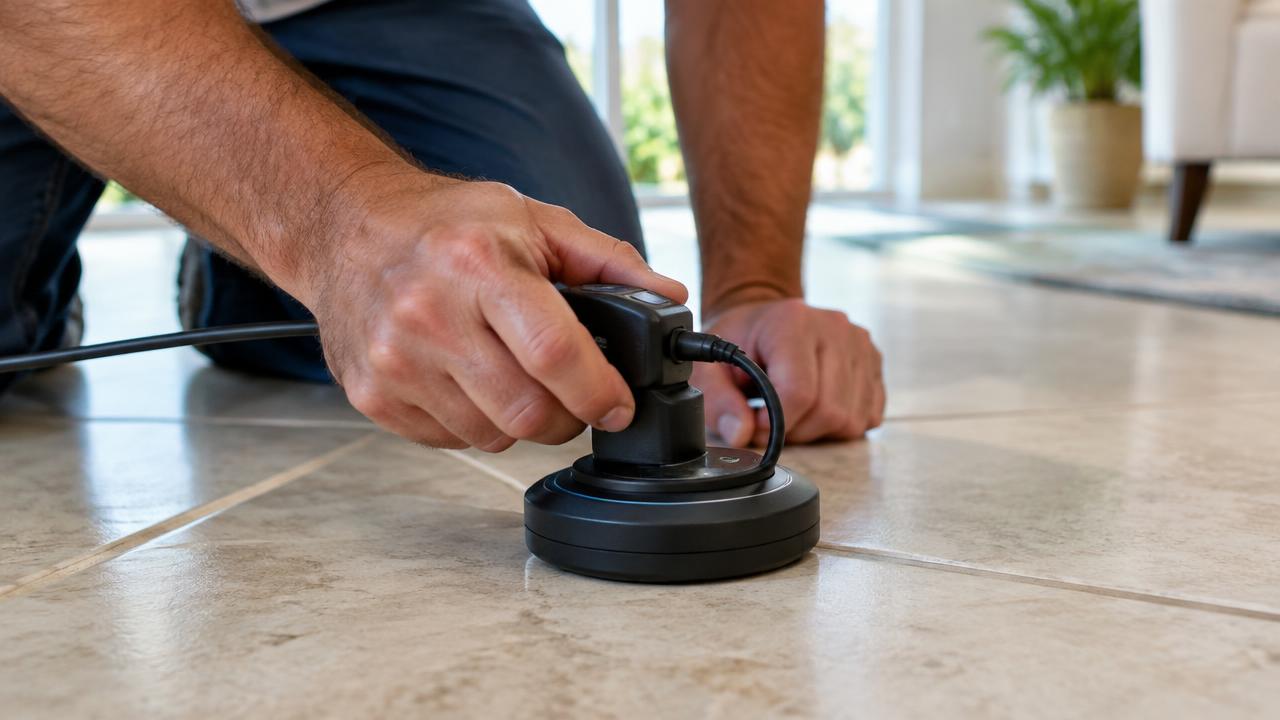
8 warning signs
- Water bill rising without more use
- Meter moves with all fixtures off
- Warm spots on tile (a hot-water line leak)
- Damp carpet, warped wood, or cracked tile
- Sound of running water when nothing is on
- Musty odor or mold at baseboards
- Low pressure throughout the home
- Water heater running more than usual
Do the meter test
Turn off all water use, read the meter, wait 30–60 minutes, and read it again. Movement means a leak somewhere — not always the slab, but worth a professional check. Our leak detection service explains next steps.
Why it happens
Sandy soil movement, hard water wear, and pipe age all play a part. Older homes with original copper or galvanized lines are more at risk, and a home with repeated leaks may be a candidate for repiping.
Common questions
Can a slab leak be fixed without breaking the floor?
Sometimes. Depending on the location, rerouting the line can avoid opening the slab. Finding the leak precisely first keeps options open.
Does a slab leak damage the foundation?
Prolonged leaks can erode soil under the slab and damage flooring, so it's best to act early.